The Hidden Impact of Map Embeds on Local Search Rankings: Entity Authority in 2026
If you are a local business owner or a contractor – whether you’re fixing leaky pipes in Chicago or installing roofs in Dallas – you already know that the “Local 3-Pack” is the holy grail of digital marketing. But here is the reality most SEO agencies won’t tell you: the competition has moved beyond just “having a profile.” In 2026, the battle for visibility is won through technical entity signals and trust reinforcement.
Research consistently shows that the Google Local Map 3-Pack receives between 40% to 50% of total clicks for searches with local intent. That is nearly half of your potential revenue locked behind a map interface. To claim your share, you need more than just a verified listing; you need a cohesive strategy that bridges your website and your physical location. This is where the controversial yet potent tactic of map embedding comes into play. As a core component of google business profile seo, map embeds are often misunderstood as mere “visual fluff,” but for those of us in the trenches, they represent a vital signal in the local search algorithm.
Is it Visual Fluff or a Ranking Signal?
There is a long-standing debate in SEO forums, from the Local Search Forum to high-level Facebook Masterminds, about whether embedding a Google Map on your website actually moves the needle. The skeptics argue that an iframe code (which is what a map embed is) cannot possibly pass “link juice” or authority. They call it visual fluff – a convenience for the user, nothing more.
However, practitioners who track micro-movements in rankings see a different story. When we perform deep dives, such as What We Learned From Auditing 50 Underperforming Google Business Profiles, we consistently find that profiles integrated deeply into the website’s architecture outperform those that exist in a silo. It isn’t about “link juice” in the traditional sense; it’s about validation. In an era where AI can generate thousands of fake business listings in seconds, Google’s primary challenge is “Trust.” An embed is a declaration of presence. It is a piece of the local search optimization puzzle that confirms your website and your Google Business Profile (GBP) are the same entity.
The Science of Entity Linking
To understand why map embeds work, you have to understand the concept of “Entity Linking.” Google no longer just looks at keywords; it looks at “Entities” – distinct, well-defined objects like a person, place, or business. When you embed a map directly from your verified GBP, you are creating a hard, machine-readable link between your website’s domain authority and your physical location’s coordinates.
This reinforcement is critical for your Name, Address, and Phone (NAP) data. In the past, simple text on a footer was enough. But as we discussed in Why 2026 Voice Search Ignores Your Messy NAP Consistency Data, modern search engines and AI assistants require structured proof. By using an embed, you are pulling data directly from Google’s own database and displaying it on your site. This creates a feedback loop that helps rank google business profile listings by proving to the algorithm that the business mentioned on the page is the exact same entity verified in the Map database. It eliminates ambiguity, and in SEO, ambiguity is a ranking killer.
Proximity, Relevance, and Prominence: The Three Pillars
Google’s local algorithm is built on three pillars: Proximity, Relevance, and Prominence. Map embeds touch all three, but they are particularly powerful for Relevance and Proximity.
- Proximity: An embed tells Google exactly where you are located in relation to the user. While you can’t change where your office is, you can reinforce the “centrality” of your location.
- Relevance: When you embed a map on a specific service page – say, an “Emergency Plumbing” page – you are telling Google that this specific service is relevant to the geographic area shown in the map.
- Prominence: High-quality google maps seo tools often show that businesses with higher engagement on their embedded maps (users zooming in, clicking for directions) see an increase in overall prominence.
For more on how Google evaluates these factors in the current landscape, see 3 New Maps Trust Signals Google Prioritizes for 2026 Search. The goal is to make it as easy as possible for Google’s “spiders” to connect your digital content with your physical world footprint.
Web 2.0 Map Embeds: The “Secret” Tactic
While embedding a map on your own website is “Local SEO 101,” advanced agencies often use a strategy known as Web 2.0 Map Stacking. This involves taking your GBP embed code and placing it across a network of high-authority, geographically relevant third-party properties. This is a common tactic used by any high-end gmb ranking service to “blast” hyper-local signals back to the main profile.
The logic is simple: if your business map is embedded not just on your site, but also on local blogs, news sites, and industry-specific directories, Google perceives your business as a “landmark” or a significant entity in that area. However, there is a fine line between strategic embedding and spam. In 2026, the quality of the placement matters more than the quantity. We’ve found that 7 Human-Verified Citation Backlinks That Outrank AI in 2026 provide a much stronger foundation for these embeds than thousands of low-quality bot-generated pages. When done correctly, this “stacking” creates a web of geographic relevance that is incredibly difficult for competitors to overcome.
How to Embed a Map Correctly (The Technical Guide)
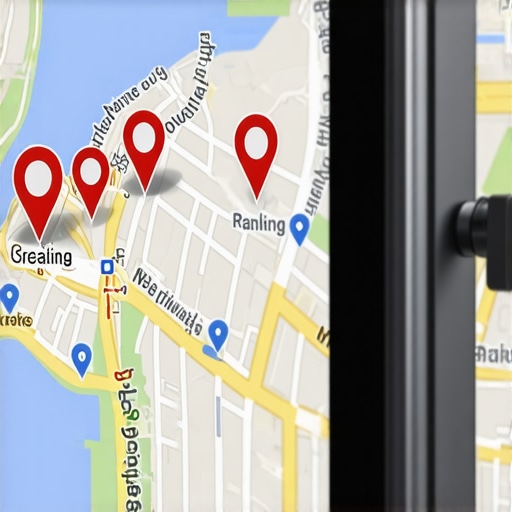
Many business owners make the mistake of simply searching for their address on Google Maps and hitting “Embed.” This is a missed opportunity. To truly assist in google business profile optimization, you must embed the Business Entity Map, not just a generic location map.
Step-by-Step Instructions:
- Log into the Google account that manages your GBP.
- Search for your business name on Google Maps.
- Ensure the “Knowledge Panel” (the box with your photos and reviews) appears.
- Click the “Share” icon.
- Select the “Embed a map” tab.
- Copy the HTML code provided.
- Paste this code into the footer or “Contact Us” page of your website.
Warning: Ensure the pin is exactly where it should be. We often see cases where Why Your Google Maps Pin Suddenly Changed Streets Without Your Permission due to automated “helpful” edits by users or AI. If you embed a map with an incorrect pin location, you are essentially telling Google to rank you in the wrong place. This technical precision is what allows you to rank higher on google maps compared to those who take a “set it and forget it” approach.
Common Pitfalls & The 2026 “Maps Trust” Factor
As we move deeper into 2026, Google is leaning heavily on “Maps Trust Ranking.” This is an internal metric that determines how much Google trusts the data associated with a profile. One of the quickest ways to lose trust is through data inconsistency. If your embedded map shows one address, but your website’s schema markup shows another, or if you have The Tiny Street Suffix Error That Keeps Your Business Off the Map, your rankings will plummet.
Another common pitfall is the “Ghosted Pin” phenomenon. This happens when a business appears in search but the map pin is missing or doesn’t trigger directions correctly. If you find your Map Pin Ghosted? 5 Trust Ranking Factors to Fix in 2026, the first thing you should check is your embed health. Ensure your site isn’t blocking the Google Maps API and that your iframe is responsive (looks good on mobile). Since over 60% of local searches happen on mobile devices, a broken map embed on a smartphone is a signal to Google that your business provides a poor user experience.
The Impact of User Engagement
Beyond the technical entity link, map embeds drive User Engagement. When a user spends time interacting with a map on your site – zooming in to see nearby landmarks or checking the commute time – they are increasing their “dwell time” on your page. Google tracks these signals. High dwell time and interaction rates are secondary ranking factors that tell the algorithm your content is valuable. This is why using local seo tools to track how users interact with your maps can provide a competitive edge.
Conclusion: Bridging the Gap
In the complex world of local search, there is no single “magic button” that will put you at the top of the 3-Pack. However, map embeds are a cornerstone of a high-authority strategy. They bridge the gap between your website and your Google Business Profile, creating a unified entity that Google can trust and rank.
By reinforcing proximity, proving relevance through entity linking, and leveraging advanced tactics like Web 2.0 stacking, you position your business as the dominant authority in your service area. If you are struggling to move the needle, it may be time to look beyond basic citations and focus on the technical signals that matter in 2026. Whether you choose to handle this in-house or hire a professional google maps ranking service, the goal remains the same: total geographic dominance.
Don’t let your business be a ghost on the map. Audit your embeds, verify your entity links, and start claiming the 50% of clicks you’ve been missing. If you need a more automated approach to managing these complex signals, utilizing local seo software can help you monitor your “Maps Trust” and keep your rankings stable even as the algorithm evolves.
About the Author
Shahid Anwar is a Local SEO & Google Business Profile (GBP) specialist with over a decade of experience helping service-based businesses dominate their local markets. Known for a data-driven approach, Shahid focuses on the technical nuances of entity linking and proximity signals to help clients turn Google Maps visibility into sustainable lead generation.