
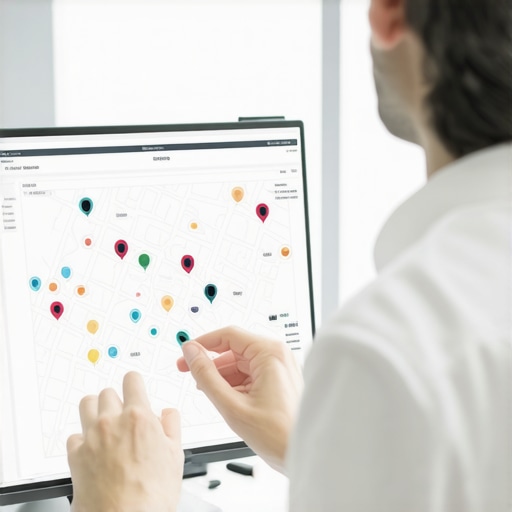
Have you ever watched a potential client look up your business on Google Maps, only to see your location mysteriously misplaced or ghosted entirely? I remember the sinking feeling when a hot lead disappeared because our info was just a tad off on the map. That moment was a lightbulb for me—bad map data isn’t just a minor hiccup; it’s a barrier between you and valuable leads. If your map listings are unreliable, you’re essentially handing your prospects a reason to go elsewhere.
Why Map Data Accuracy Is the Secret to Local Success
Local SEO and map trust signals play a crucial role in how Google ranks your business in local searches. In fact, a recent study shows that 7 vetted citation backlinks still dominate the 2026 map rankings. That means your local listings need to be spot-on—any discrepancies or inconsistencies can cause your map pin to vanish or your business to appear ghosted, losing you leads you should be capturing. I made the mistake early on of ignoring small address mismatches, which cost us first-page rankings and direct calls. Trust me, fixing these issues isn’t just about rankings; it’s about real-world revenue.
So, how do you prevent this from happening to you? Today, I’ll walk you through 4 straightforward fixes that can dramatically improve your map trust signals and stop the leakage of leads due to bad map data. These aren’t complicated, tech-heavy tasks; they’re simple, effective steps that anyone can implement. Before we dive in, consider this: If you haven’t checked your map trust signals lately, you might be unknowingly sabotaging your own local visibility.
Is Your Map Data Really That Important?
One of my early mistakes was thinking that just having a Google My Business listing was enough. Turns out, multiple tiny errors—like misplaced NAP details or inconsistent address formatting—send confusing signals to Google, making your pin less trustworthy. If you’re skeptical about how much these small details matter, read this overview of trust signals. Fixing these issues can be the difference between appearing at the top of local results or being invisible when a paying customer needs you most.
If you’re tired of losing leads to map errors and want a clear path to fixing your local visibility, keep reading. Next, I’ll show you how to identify and correct the most common mistakes sneaking into your map data and, importantly, how simple it can be to turn things around.
Audit and Identify Common Map Data Problems
Start by reviewing your Google My Business listing and local citations for inconsistencies. Look for address mismatches, outdated phone numbers, or misspelled business names. Use a dedicated NAP (Name, Address, Phone Number) consistency check, and compare your info across multiple directories. An effective method I used was running a quick audit with a tool that scans local listings, exposing discrepancies that could be hurting your trust signals. Fix any mismatches promptly; even minor errors like abbreviating “Street” as “St.” inconsistently can lower your local trust. Visit this guide to learn how address inconsistencies sabotage your rankings.
Many business owners believe that building a large number of citation backlinks automatically guarantees top local rankings, but in my experience, quantity often trumps quality—yet this is a dangerous misconception. While securing backlinks from numerous directories can boost your visibility, ignoring the authority and relevance of those sources can actually harm your local trust signals. For instance, a study highlights that high-trust, niche-specific citations outperform generic or spammy links in improving map rankings. So, focus on securing backlinks from reputable, industry-relevant sites rather than just amassing a multitude of low-quality listings.
Are All Citations Created Equal, or Can Too Many Hurt Your Map Trust?
Many believe that increasing the number of citation backlinks will always improve rankings, but overly aggressive link-building can trigger Google’s spam filters, especially if your citations appear unnatural or inconsistent. A common trap is to focus solely on quantity while neglecting the accuracy of NAP details across these sources, leading to confusion for Google and a drop in trust. Consistency remains paramount; irregular entries can cause your map pin to become Maintaining accurate map data and citation backlinks isn’t a set-and-forget task; it requires regular attention and the right tools to stay ahead in 2026’s competitive local search landscape. I personally rely on a combination of advanced auditing tools, automation scripts, and manual checks to ensure my business listings remain consistent and authoritative. For instance, I use BrightLocal’s Citation Tracker because it provides comprehensive insights into your current citations, identifies discrepancies instantly, and helps prioritize fixes so you’re not wasting time on low-impact edits. This tool has saved me countless hours and prevented accidental inconsistencies that could harm my trust signals.
Another indispensable resource is Moz Local, which not only helps distribute updates across multiple directories but also verifies NAP consistency in real-time. I make it a habit to run bi-weekly audits with Moz Local, especially after any business address change or expansion. Staying proactive means you catch issues before they impact your rankings. This continuous process is vital because Google’s AI algorithms become better at detecting NAP inconsistencies and low-quality backlinks, which can significantly hurt your local prominence.
Looking ahead, I believe automation and AI-driven audits will become even more crucial. Future tools will leverage machine learning to predict potential drops in trust signals and suggest preemptive fixes, saving marketers and business owners from reactive firefighting.
### How do I maintain citation backlinks and map data over time?
First, schedule regular audits with tools like BrightLocal or Moz Local—don’t just set it once; make it a routine. Second, establish a protocol for updating NAP details immediately when changes occur, using automation where possible. Third, leverage niche-specific directories that Google recognizes as high-trust sources; tools like Whitespark’s Local Citation Finder can identify these hotspots for your industry. Finally, engage in ongoing link-building from reputable sources; avoid the trap of chasing quantity, as high-quality backlinks from local business associations or industry niches pass stronger trust signals. By integrating these steps into your routine, you’ll dramatically reduce the risk of your map pin vanishing and keep your local rankings solid.
To stay competitive, consider making automation your ally—set up scripts or use API integrations that trigger alerts for citation anomalies. This way, you can respond swiftly, ensuring your local footprint remains pristine. Remember, consistent maintenance is about small, continuous improvements that compound over time, safeguarding your visibility against the evolving algorithms.
If you want a proven strategy, start by fixing your 4 map trust signals highlighted in our detailed guide, which can dramatically improve your local rankings and lead flow. Implementing these proactive measures can ensure your business stays prominent and trustworthy in the eyes of both users and Google.
The Hidden Lessons That Changed My Approach to Local Listings
One of the most eye-opening realizations I had was that small inconsistencies in your NAP details can silently sabotage your local rankings. I once neglected to standardize my address formatting across directories, and the impact was immediate—my map pin became ghosted, and leads dried up. That experience taught me that attention to detail isn’t just a best practice—it’s the backbone of trust signals that Google and customers rely on.
Another lesson was understanding that building backlinks without prioritizing quality can do more harm than good. I initially chased after numerous low-authority citations, thinking volume equated to success. The result? Google’s trust signals were confused, and my rankings suffered. Focusing on reputable, industry-relevant backlinks refined my local presence and boosted my visibility considerably.
Finally, I learned that regular audits and proactive fixes are essential. Manual checks combined with automation tools like BrightLocal saved me from letting small errors accumulate. Consistent maintenance keeps your map data trustworthy and your business in the spotlight.
Tools That Turn Knowledge Into Action
To implement what I’ve learned, I rely heavily on BrightLocal and Moz Local. BrightLocal’s Citation Tracker helps me quickly identify discrepancies and prioritize fixes, making my cleanup process efficient. Moz Local streamlines update distribution and maintains NAP consistency across major directories. These tools have been game-changers in my ongoing local SEO journey, helping me stay ahead of the evolving Google algorithms.
For strategic learning, I recommend reading industry-specific blogs and case studies, such as those from localcitationsforseo.com, which offer insights based on real-world data. Staying informed allows me to adapt my tactics swiftly, ensuring my local listings remain trustworthy and authoritative.
Your Next Step Starts Now
Armed with these insights and tools, you’re now equipped to elevate your local visibility through smarter map data management. Remember, the key isn’t just fixing issues one time but cultivating a habit of continuous improvement. Your business’s future in local search depends on it—start today, and watch your leads grow.
What’s been your biggest challenge in maintaining accurate map trust signals? Share your experience below—I’m here to help!
Comments are closed.