The Exact Checklist We Use to Rank Plumbers in Hyper-Competitive Cities
In the plumbing industry, the digital landscape of 2026 has become a battlefield where only the most strategically optimized survive. Gone are the days when a simple “near me” search would guarantee a steady stream of emergency calls. Today, the Google Map Pack is governed by a sophisticated interplay of Relevance, Proximity, and Prominence – a trifecta that demands more than just a basic listing. As a specialist in google business profile seo, I have seen firsthand how “big box” franchises with massive budgets can still lose to a local shop that masters the nuances of the algorithm. My name is Marco Herrera, and in this guide, I am pulling back the curtain on the exact playbook we use to dominate high-competition markets. If you want to stop being a ghost in the search results and start capturing the high-intent leads that drive revenue, you need to understand that the rules have changed.
Why Traditional Plumbing SEO Fails in 2026
The mistake most plumbers make is clinging to 2018 tactics in a 2026 world. For years, the industry was obsessed with “bulk citations” – listing your business on every obscure directory from here to Timbuktu. However, what the data shows for 2026 is that Google’s AI search bots have evolved. They no longer care about the quantity of your backlinks; they care about “Maps Trust.” This concept represents the level of confidence Google has in the physical reality of your business.
In our experience, AI search agents (like Google’s SGE) now prioritize human-verified data over AI-generated spam. When a homeowner has a burst pipe at 3:00 AM, Google doesn’t want to show them a lead-generation shell company; it wants to show them a verified, local expert with a fleet of trucks and a history of real-world service. This is why Why Quality Over Quantity Wins for 2026 Citation Backlinks is a core pillar of our strategy. If your data is inconsistent across the web, your “Maps Trust” score plummets, and your pin disappears from the Map Pack. To combat this, we utilize advanced google business profile seo techniques to ensure that every signal sent to the algorithm reinforces your authority and physical presence.
Phase 1: The Google Business Profile (GBP) Power-Up
Your Google Business Profile is the heart of your local presence. However, most contractors treat it like a static “set it and forget it” yellow pages ad. In high-competition cities, that approach is a recipe for failure. To truly google maps optimization your profile, you must go deeper into the technical settings.
Primary and Secondary Category Selection
One of the most common errors we see is the incorrect weighting of categories. While “Plumber” must be your primary category to capture the broadest search volume, your secondary categories are where you win the niche battles. If you offer specialized services, you must include “Drainage service,” “Water damage restoration service,” or “HVAC contractor” as secondary categories. This allows you to appear in the Map Pack for long-tail, high-margin keywords that your competitors are ignoring.
The 2026 Photo Strategy
In 2026, Google’s Cloud Vision AI “reads” your photos to verify your location and service quality. Stock photos are now a ranking liability. Our checklist requires:
- Real-Work Photos: High-resolution images of your branded trucks parked in front of recognizable local landmarks or street signs.
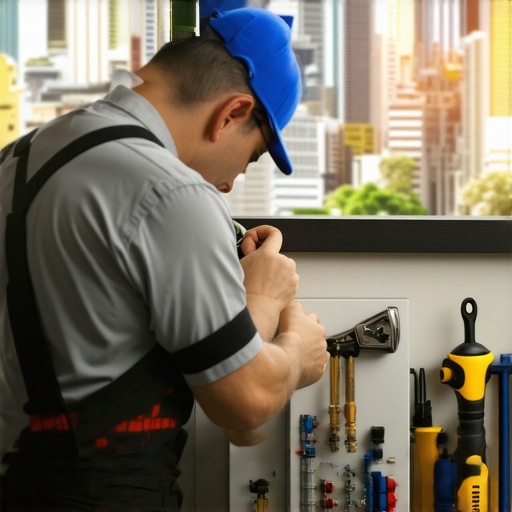
- Team On-Site: Photos of your technicians in uniform, performing actual work. This proves to the AI that you are a legitimate service provider.
- EXIF Data: While Google says they strip metadata, our internal testing suggests that photos uploaded with original GPS coordinates and timestamps provide a “Proximity” boost that is hard to ignore.
Service Area Business (SAB) vs. Physical Office
The “hidden address” hurdle is a major pain point for plumbers working out of their homes. While an SAB listing is legitimate, Google naturally gives a slight “Prominence” edge to businesses with a verified physical office. If you are an SAB, you must work twice as hard on your local content and review velocity to compensate for the lack of a public-facing pin. We often advise clients to invest in a small, legitimate office space in the heart of their target service area to anchor their “Maps Trust.”
Phase 2: Building “Maps Trust” and Local Prominence
Maps Trust is not built overnight; it is the result of consistent, verified signals being fed into the algorithm. The research data is clear: Google prioritizes businesses that exhibit high levels of “Prominence” through third-party validation. This is where local seo tools become essential for monitoring your digital footprint.
A significant trend we’ve identified for 2026 is that voice search agents (Alexa, Siri, and Google Assistant) are becoming increasingly intolerant of messy NAP (Name, Address, Phone) data. If your business is listed as “Joe’s Plumbing” on Yelp but “Joe’s Plumbing & Rooter” on your GBP, the voice search algorithm may exclude you from the results to avoid providing the user with conflicting information. You can learn more about this in our guide on how to 3 New Maps Trust Signals Google Prioritizes for 2026 Search.
Furthermore, emergency keywords like “burst pipe” or “24-hour plumber” require a higher “Trust Ranking” to appear in the top 3. Because these searches represent high-stress, high-liability situations, Google’s algorithm is programmed to only show the most reputable and established businesses. Building this trust requires a clean backlink profile and a website that is technically sound and mobile-responsive.
Phase 3: Hyper-Local Content & Service Area Pages
If you want to dominate a city like Chicago or Houston, you cannot just write for the city as a whole. You need to write for the neighborhoods. The “Plumber in [City]” strategy is dead; the “Plumber in [Neighborhood Name]” strategy is the future. This is what we call “Hyper-Local SEO.”
Create dedicated service area pages for every major neighborhood you serve. These pages should not be “thin content” or carbon copies of each other. They must include:
- Neighborhood-Specific Landmarks: Mentioning local parks, schools, or historical sites helps the AI associate your business with that specific geographic micro-zone.
- Local Case Studies: “We recently repaired a water heater for a family in [Neighborhood], near the [Local Landmark].” This provides social proof and geographic relevance simultaneously.
- Embedded Maps: A custom Google Map showing your service radius within that neighborhood.
To support these pages, you need high-quality local links. Check out our resource on 7 Vetted Citation Backlink Sources for Hyper-Local 2026 Visibility to see where you should be focusing your outreach efforts. By building a web of local relevance, you tell Google that you aren’t just a plumber in the city – you are a plumber for the people on that specific block.
Phase 4: The Review Velocity Engine
Reviews have always been important, but in 2026, the algorithm has become much more sophisticated in how it interprets them. It’s no longer just about having a 4.8-star rating. To rank higher on google maps, you need to master “Review Velocity” and “Keyword Richness.”
Review Velocity refers to the consistency with which you receive new reviews. A business that got 50 reviews three years ago but none in the last month is seen as “stale.” Google wants to see a steady pulse of customer feedback. This indicates that the business is active and currently satisfying customers.
Keyword Richness is the “insider” secret to Map Pack dominance. When a customer leaves a review, Google’s NLP (Natural Language Processing) scans it for service-related keywords. If multiple customers mention “water heater repair” or “emergency drain cleaning” along with your city name, Google gains a much higher confidence in your relevance for those specific searches. We instruct our clients to ask their customers to be specific: “Would you mind mentioning that we fixed your tankless water heater in your review?” This simple request can move the needle more than a thousand dollars in traditional advertising.
Phase 5: Technical SEO & AI Search Readiness
As we move deeper into the era of AI-driven search, technical SEO has become the “secret language” that allows your business to communicate directly with search bots. Local Business Schema (JSON-LD) is no longer optional; it is a mandatory requirement for appearing in Google’s Search Generative Experience (SGE).
Schema markup tells the AI exactly what your business is, what services you offer, your hours of operation, and your exact geographic coordinates. Without this structured data, you are essentially asking the AI to “guess” what your business is about. In a competitive market, the AI won’t guess – it will simply move on to a competitor who has their technical house in order. We highly recommend you Sync Your NAP Data for 2026 Voice Search SEO [Tutorial] to ensure your schema is perfectly aligned with your GBP and website data.
Additionally, you must audit your site for “Address Mismatches.” Even a small discrepancy, like using “Suite 100” on your website and “Ste 100” on your GBP, can create friction in the algorithm. For a deep dive into fixing these issues, see our guide on how to Fix 4 Address Mismatches That Kill Your 2026 Search Reach. Technical perfection is the foundation upon which all other SEO efforts are built.
Conclusion: Turning Rankings into Revenue
Ranking in the top 3 of the Google Map Pack is the ultimate goal, but it is only the beginning. Ranking is the start; conversion is the goal. Once you have visibility, your profile must be compelling enough to make the user click “Call.” This means having a professional profile picture, a clear list of services, and a “Booking” button integrated directly into your GBP.
The plumbing industry is more competitive than ever, but by following this 2026 checklist, you can build a moat around your business that “big box” competitors can’t easily cross. Start by auditing your listing today using professional local seo ranking tools. The data doesn’t lie: those who adapt to the new rules of Maps Trust and Hyper-Local relevance will be the ones answering the phones when the next emergency call comes in.
Comments are closed.