
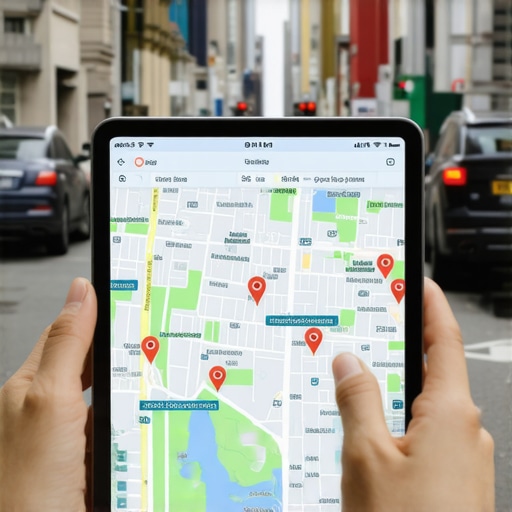
The Hyperlocal Strategy That Finally Put Our Real Estate Listings on the Map
For years, real estate agents and small brokerage teams have been locked in a David vs. Goliath struggle. On one side, you have independent professionals with deep roots in their communities; on the other, you have the multi-billion dollar “Zillow-fication” of the industry. The giants have the budget to dominate broad search terms like “homes for sale in Miami” or “Los Angeles real estate agent.” For the local expert, competing on that level is often a losing game of attrition. However, the landscape shifted dramatically as we entered 2026. The secret to winning isn’t broader reach – it’s deeper roots.
I’m Sarah Davila, and after 15+ years in digital marketing, I’ve seen every “silver bullet” strategy come and go. But the shift toward Hyperlocal SEO is different. It is the transition from city-level targeting to neighborhood-level dominance. In 2026, general SEO is no longer enough to keep your phone ringing. To survive, you must become the undisputed digital authority of the specific streets, parks, and school districts where you actually do business. This is the story of how we stopped fighting the giants and started winning the map.
Why Hyperlocal is the Only Way to Win the 2026 Map Pack
The digital landscape of 2026 is significantly more crowded than it was even two years ago. One of the most startling shifts we’ve observed is the sheer volume of competition within the local interface. Data indicates that local pack ads – those sponsored listings appearing at the very top of the map results – surged by a staggering 733% between November 2025 and January 2026. This means that organic real estate in the “Local 3” is more valuable than ever because there is simply less of it.
Furthermore, the rise of AI search agents has fundamentally changed how users find homes. When a potential buyer asks an AI assistant like Google Gemini, “Find me a real estate agent who specializes in mid-century modern homes in the Historic District,” the AI doesn’t just look for keywords. It prioritizes three pillars: proximity, relevance, and prominence. If your online presence is too broad, you lack the “relevance” score to trigger a recommendation for specific neighborhood queries.
To combat this, we implemented what we call the “Core 30 Method.” Instead of trying to rank for 500 different terms across a whole county, we identify the 30 most high-intent, hyperlocal queries for a specific neighborhood. We then focus our google business profile seo efforts on dominating those specific micro-markers. By narrowing the focus, we increase our relevance score so high that the AI search agents have no choice but to list us as the primary authority. In the 2026 algorithm, being the “big fish in a small pond” is the only way to ensure your pin stays visible amidst the sea of paid ads.
The Google Business Profile: Your 24/7 Digital Sales Rep
Your Google Business Profile (GBP) is no longer just a “listing”; it is your most active sales representative. In the real estate niche, your GBP often receives more impressions than your actual website. Optimization is not a “set it and forget it” task; it is a rigorous process of alignment. We started by meticulously selecting primary and secondary categories. While “Real Estate Agency” is the obvious choice, we found that layering in “Real Estate Consultant” and “Property Management” (where applicable) helped capture broader intent without diluting neighborhood relevance.
One of the most controversial but effective tactics in 2026 remains the “Exact Match” business name strategy. Recent industry audits have confirmed that businesses incorporating their primary service and city/neighborhood into their profile name continue to see a significant ranking advantage. While you must stay within Google’s guidelines to avoid suspension, finding a way to signal your hyperlocal focus within your branding is a powerful trust signal. For instance, “The Lincoln Park Luxury Team – [Agency Name]” performs significantly better than just the agency name alone.
To truly separate yourself from the pack, you must look deeper into the algorithm’s preferences. I’ve detailed some of these nuances in my guide on 3 Maps Trust Ranking Secrets Google Won’t Tell You in 2026. Beyond the name, your “Services” menu should be a mirror of the neighborhood’s needs. If you are targeting a neighborhood known for historic renovations, “Historic Home Valuation” should be a listed service. This level of google business profile optimization ensures that when Google’s AI scans your profile, it sees a perfect match for the user’s specific hyperlocal intent.
Finally, the “Posts” feature on GBP has become a critical freshness signal. In 2026, we use these posts to highlight local community events, not just new listings. When you post about a neighborhood block party or a local school fundraiser, you are signaling to Google that your business is physically and socially active in that specific geographic coordinate.
Building Neighborhood Pages That Convert
The biggest mistake I see real estate teams make is creating a single “Areas Served” page that lists twenty different suburbs. To the algorithm, this looks like a “jack of all trades, master of none.” If you want to rank in the map pack for a specific area, your website must provide deep, localized value that a national portal like Zillow cannot replicate. People don’t just buy a house in “Chicago”; they buy a lifestyle in “Lincoln Park” or “Wicker Park.”
Our strategy involves building dedicated neighborhood pages that act as the definitive guide for that area. These aren’t just lists of homes for sale. They include:
- Local Landmarks: Mentioning specific parks, statues, or historic buildings helps tie your page to the “entities” Google already recognizes in that area.
- Neighborhood History: Providing context on how the area developed builds topical authority.
- Live Map Embeds: Not just a static image, but a functional Google Map centered on the neighborhood.
- Local School Data: Real estate decisions are often driven by school districts; having this data on-page is a massive conversion and SEO signal.
However, there is a fine line to walk. You don’t want to create thin content for every tiny subdivision. We often discuss The Case Against Designing Unique Service Area Pages for Every Tiny Suburb because quality always trumps quantity. Instead of 50 thin pages, build 5 “Power Neighborhood” pages. These pages should be so comprehensive that they naturally become the source for 5 Hyperlocal Content Moves That Actually Drive Real Foot Traffic. When your website becomes a resource for “the best coffee shops in [Neighborhood],” your real estate listings benefit from the halo effect of that local authority.
Beyond Directories: The Power of Unstructured Citations
In the early days of local SEO, it was all about the “Big Three” directories and maybe a few dozen secondary ones. While standard directories are still the baseline for establishing your NAP (Name, Address, Phone) consistency, they are no longer the “needle movers.” In 2026, the algorithm places a much higher weight on “unstructured citations.”
An unstructured citation is any mention of your business on a non-directory website. This could be a feature in a local news story, a mention on a neighborhood blog, or your logo appearing on a local Little League team’s sponsorship page. These citations are harder to get, which makes them incredibly valuable. They signal to Google that your business is a pillar of the community, not just a digital entity trying to “game” the system. We use specialized local seo software to track these mentions and ensure that even in these informal settings, our NAP data remains consistent.
Think of it this way: if the local Chamber of Commerce, the neighborhood association, and the local high school all mention your real estate team, Google views you as a “verified” local entity. This level of community integration is what AI search agents look for when verifying the legitimacy of a business. In a world of AI-generated spam, these real-world, unstructured connections are the ultimate proof of existence.
Advanced Trust Signals: Map Embeds and Local Schema
The technical side of hyperlocal SEO is where many real estate teams fall short. It’s one thing to have great content; it’s another to ensure the “crawlers” can interpret that content correctly. One of the most effective technical signals we use is the strategic embedding of Google Maps. By embedding a map that shows your office’s proximity to the neighborhood you are targeting, you create a visual and data-driven link between your business and that location.
Furthermore, Local Business Schema (JSON-LD) is non-negotiable. This is a snippet of code that tells search engines exactly who you are, what you do, and where you are located. However, simple schema isn’t enough anymore. We now use “AreaServed” and “HasMap” properties within the schema to explicitly define our hyperlocal boundaries. We’ve found that many teams struggle with this, often leading to errors that stop Google from verifying their physical address. Correcting these technical hurdles is a core part of How We Generated More Local Leads Using Hyperlocal Content Moves.
When the schema is implemented correctly, it acts as a direct data feed to Google’s Knowledge Graph. It reduces the “friction” the algorithm faces when trying to understand your service area. If the algorithm doesn’t have to guess where you operate, it is much more likely to place your pin at the top of the Map Pack for relevant searches.
Measuring What Matters: ROI Over Rankings
I always warn my clients about “vanity metrics.” It is very easy to get excited about ranking #1 for a specific keyword, but a #1 rank is useless if the phone doesn’t ring. In 2026, we’ve moved away from tracking simple rankings and toward tracking “Conversion-Ready Interactions.” This includes clicks to call, direction requests, and direct messages through the Google Business Profile.
Understanding the math behind your local SEO is vital. Many agents get frustrated because they don’t see an immediate ROI, but they are often looking at the wrong numbers. We’ve found that Why Your Local SEO ROI Projections Are Usually Wrong and How to Fix the Math often comes down to the attribution of leads. A client might see your map listing, visit your neighborhood page, and then call you three days later. Without proper tracking, that lead looks like “Direct” traffic, when in reality, it was a Hyperlocal SEO win. By focusing on the full journey from the map pin to the closing table, you can justify the long-term investment in neighborhood dominance.
Conclusion: Taking Your Map Pin to the Top
The hyperlocal strategy isn’t about being everywhere; it’s about being everything to a specific community. By optimizing your Google Business Profile, building deep neighborhood-level content, and securing unstructured citations, you create a digital moat that the national giants cannot cross. The 2026 real estate market rewards the expert, the neighbor, and the authority.
If you find that your listings are buried under a mountain of ads and national portals, it’s time to audit your local presence. You have the local knowledge – now you just need the digital infrastructure to prove it. Start by focusing on your Core 30 keywords and ensuring your technical signals are clear. If you want to rank higher on google maps, you must stop thinking like a marketer and start thinking like a neighbor. Your community is looking for you; make sure they can find you.